
The European Union legislates through several institutions with distinct roles, and the separation between them is unlike that in a national parliament. Understanding which body does what resolves a good deal of the confusion in reporting about Brussels.
The institutions
- The European Commission proposes legislation and is responsible for enforcing it. Its members are nominated by national governments and approved collectively by the Parliament. It cannot pass a law by itself.
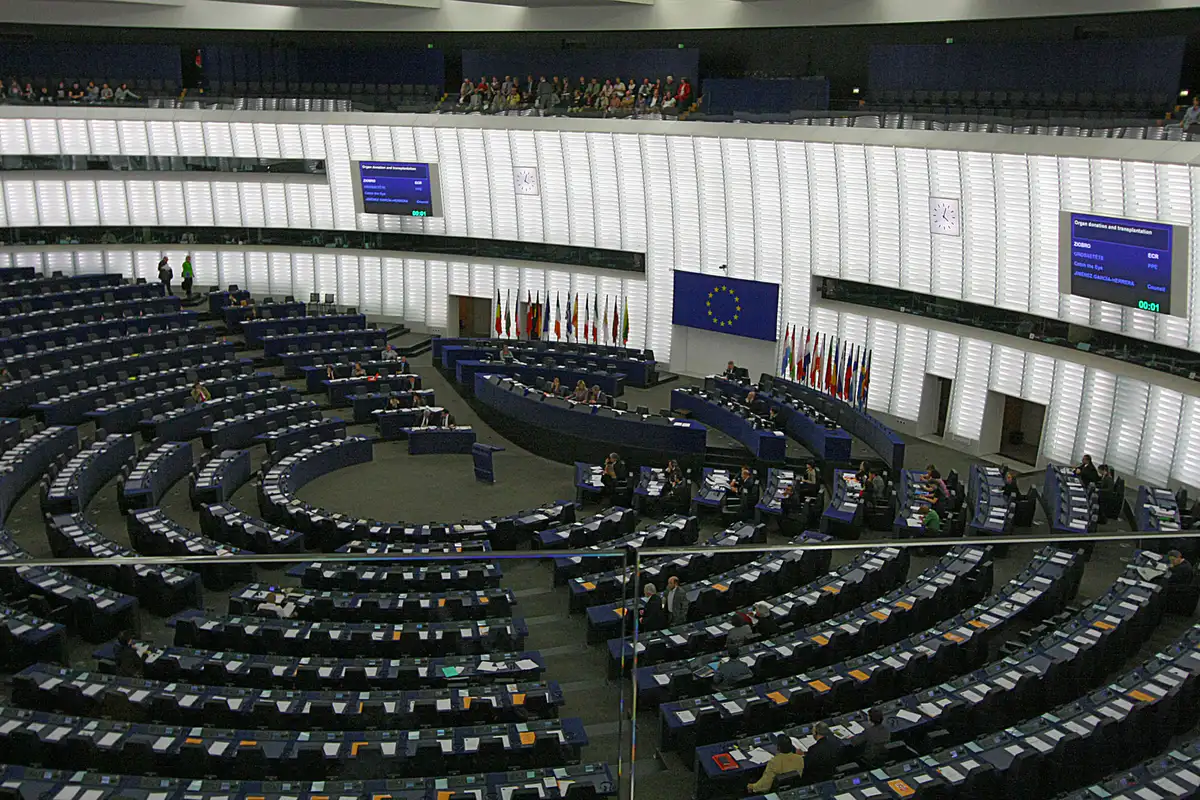
- The European Parliament is directly elected by citizens every five years. It amends and votes on proposals, and must approve the budget, but it cannot initiate legislation.
- The Council of the European Union consists of ministers from national governments, meeting in configurations by subject. It amends and votes alongside the Parliament.
- The European Council is the heads of state and government. It sets overall political direction and does not legislate.
- The Court of Justice interprets EU law and rules on whether member states and institutions have complied with it.
The two Councils are distinct bodies with confusingly similar names, and a third institution, the Council of Europe, is unrelated to the EU altogether.
The ordinary legislative procedure
Most law is made under a procedure in which the Commission proposes and the Parliament and Council must both agree. Each reads the proposal, may amend it, and the two must converge on identical text. If they cannot after two readings, a conciliation committee attempts a compromise; failing that the proposal falls.
In practice most files are settled in informal negotiations between the three institutions before the formal readings, which is efficient and is criticised for taking the substance of legislation out of public sessions.
Regulations and directives
The distinction matters for how law reaches citizens. A regulation applies directly and identically in every member state as soon as it takes effect; no national legislation is required, and none may contradict it.
A directive sets a result to be achieved and leaves the method to each member state, which must pass its own law within a deadline. The same directive can therefore produce noticeably different national rules, and a state that fails to transpose it can be brought before the Court.
Qualified majority voting
Most Council decisions require a qualified majority: at least fifty-five per cent of member states, representing at least sixty-five per cent of the EU population. Both thresholds must be met, so neither a group of small states nor a few large ones can decide alone.
Sensitive areas — foreign policy, defence, taxation, enlargement — still require unanimity, giving every member a veto. This is the mechanism behind the recurring reports of a single government blocking an EU decision, and the reason proposals to extend qualified majority voting are among the Union's most contested internal questions.



Discussion