
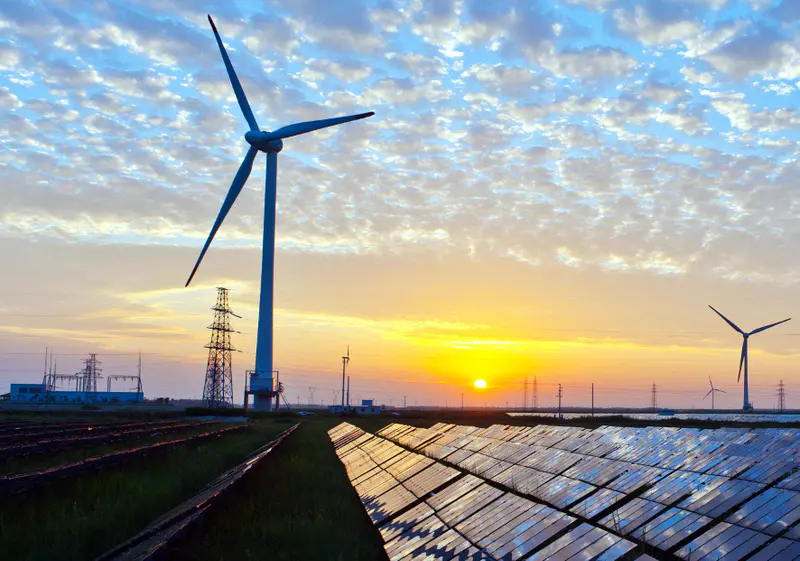
The cost of solar panels and wind turbines has fallen dramatically over two decades, and in many markets new renewable generation is now cheaper per unit of energy than new fossil capacity. That was the problem everyone expected to be hardest, and it has substantially been solved.
What remains is less visible and harder.
The grid
Wind and solar are built where the resource is, which is rarely where the demand is. Moving that power requires transmission lines, and building them takes far longer than building the generation — a decade or more once planning consent, land rights and public objection are accounted for.
The result is interconnection queues stretching to several years in major markets, in which completed or financed projects wait for permission to connect. In many places the binding constraint on decarbonisation is no longer cost or technology but a queue.
Firm capacity
A system must meet demand when the wind is not blowing and the sun is not shining, including during extended still, cloudy periods in winter.
Batteries handle hours, not weeks; they are excellent for shifting solar output into the evening and poor for covering a fortnight. Longer-duration options — pumped hydro, hydrogen, long-duration storage chemistries — are either geographically limited, immature, or expensive. Retaining some dispatchable capacity, whether nuclear, hydro or gas used rarely, is the usual answer, and how much is needed is one of the genuine technical arguments in the field.
Materials
- Copper, for essentially all electrification, in quantities that would require substantial new mine capacity.
- Lithium, nickel, cobalt and graphite for batteries, with supply concentrated in a small number of countries.
- Rare earth elements for permanent magnets in turbines and motors, where processing in particular is highly concentrated.
- Silicon and silver for photovoltaics.
The constraint is less geological than industrial and political: opening a new mine takes ten to twenty years, and processing capacity is concentrated enough that supply is a strategic question as much as a commercial one. This is a substantial part of why critical minerals now feature in trade policy.
The harder sectors
Electricity is roughly a fifth of final energy use. Cement, steel, shipping, aviation and industrial heat are harder to electrify, either because the chemistry emits carbon regardless of the energy source, as in cement, or because batteries are too heavy for the distances involved.
Solutions exist for each and are mostly expensive and early. This is why credible plans treat electricity as the first phase rather than the whole task, and why the pace of the remainder is far less certain than the pace of adding renewables has been.
Discussion