
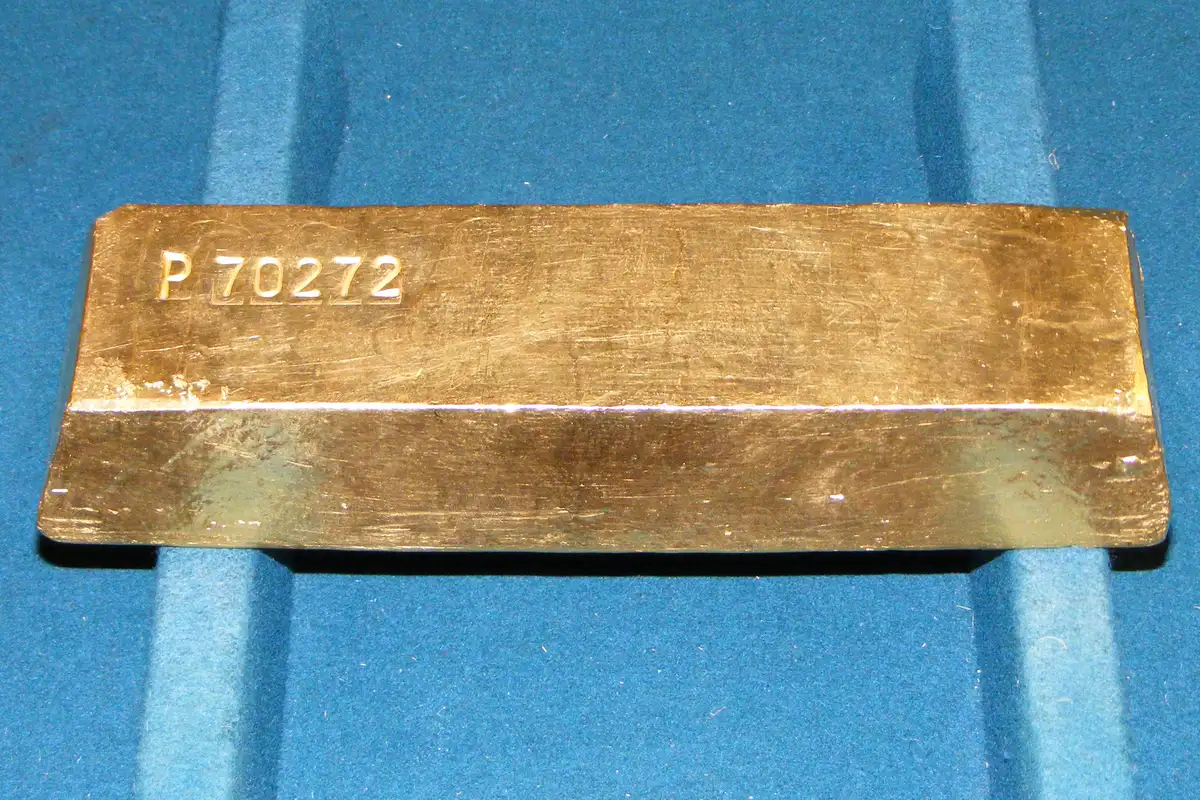
Gold pays no interest and no dividend. A share can be valued on the profits it will generate and a bond on the interest it will pay; gold generates nothing, and its price rests entirely on what someone else will pay for it.
That absence is the key to its behaviour, because it makes gold's attractiveness depend on what else is available.
The real rate
Holding gold means forgoing the interest that money could have earned elsewhere. The relevant comparison is not the headline interest rate but the real rate — the rate after inflation.
When real rates are high, government bonds pay a solid return above inflation and holding a metal that pays nothing is expensive. When real rates are low or negative, that cost disappears: a bond guaranteeing a loss in purchasing power is not obviously preferable to a metal guaranteeing nothing.
This is why gold frequently rises when rates fall and struggles when they rise, and why it can rise during high inflation and fall during high inflation, depending on whether rates rose faster than prices.
The dollar
Gold is quoted in dollars worldwide. When the dollar strengthens against other currencies, gold becomes more expensive for buyers holding those currencies, and demand tends to soften; a weakening dollar has the reverse effect.
A move in the gold price therefore partly reflects a move in the dollar rather than a change in appetite for gold itself, which is why analysts often look at gold priced in several currencies before concluding anything.
Central banks
Central banks hold gold as reserves and have been substantial net buyers in recent years. Their motivation is not investment return but the fact that gold is nobody's liability: a bond held as a reserve asset can be frozen or its issuer can default, while metal in a vault cannot be cancelled by a foreign government.
This demand is price-insensitive and slow-moving, and it has become a meaningful influence on the market — a reminder that a large share of gold buying is not an investment decision at all.
What it does and does not hedge
Gold has held purchasing power over very long periods, measured in centuries. Over the horizon on which most people invest it has been an unreliable inflation hedge, with long stretches of losing real value.
Its more dependable role is in acute crisis, where it has tended to rise while other assets fall together — valuable precisely because it is uncorrelated, and unhelpful as a source of return in ordinary conditions.


Discussion